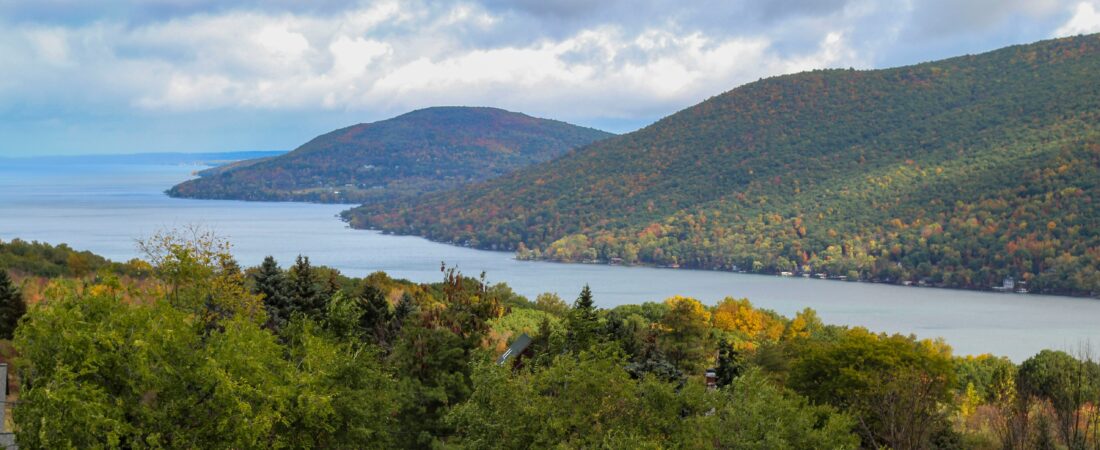
The legend says the Finger Lakes were formed when the Great Spirit placed his hands on this land to bless it, leaving behind the imprint of his fingers, long, narrow lakes pressed into the earth. Geologists offer another explanation: retreating Ice Age glaciers created the lakes about a million years ago, the intense grinding pressure of ice masses gouging deep holes into the earth, creating the long narrow lakes that lie side by side, as well as deep gorges with their rushing falls and wide fertile valleys that extend south for miles.
We like both stories.
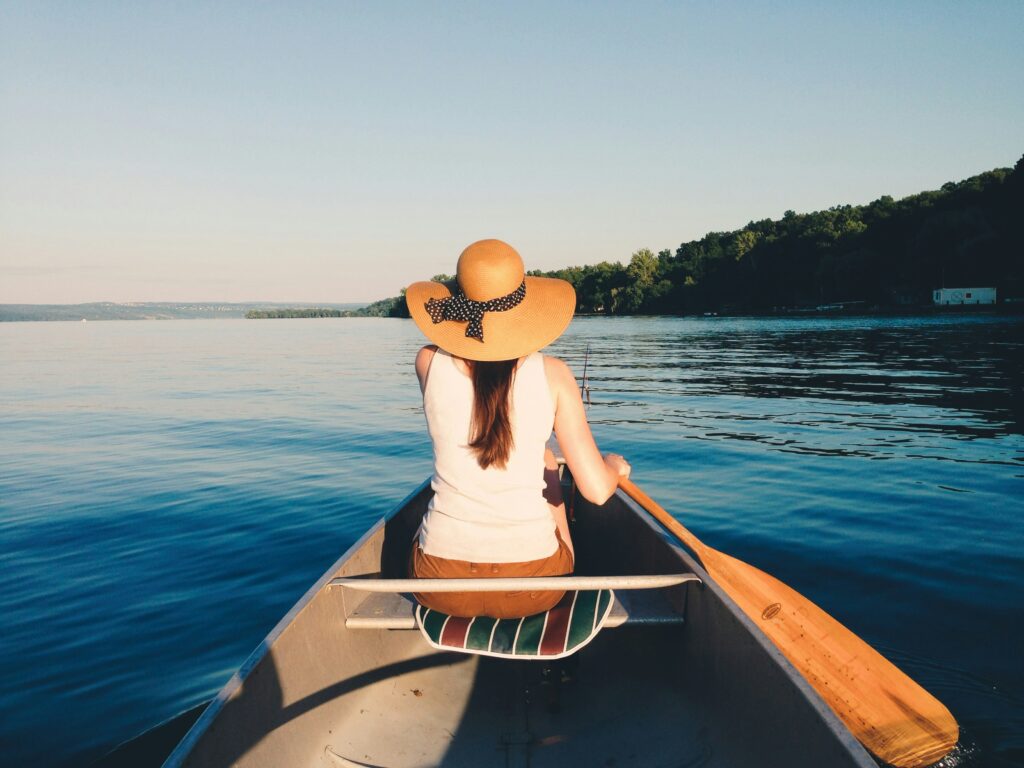
The eleven lakes range in length from 40 miles to just 3 miles, and in depth from 618 feet to just 30 feet. And every single one of them has its own personality. It’s not uncommon for visitors to love every lake but have a favorite they can’t wait to return to year after year. There are lakes that are perfect for families and kids, romantic lakes, scenic lakes, lakes for water sports, and lakes just for sitting with your feet up.
From west to east, here they all are:
1. Conesus Lake
The Western Gateway
Long considered the “jewel” of Livingston County, Conesus Lake is the westernmost Finger Lake in Upstate New York. In summer, fishing, boating, and water skiing reign supreme. Located just south of Rochester, Conesus has a warm, unpretentious energy… it’s more of a local lake community than tourist destination.
Vitale Park on the northern end and a wildlife management area to the south offer visitors much contrast. The northern end is the more social – launch a kayak, fish from shore, or just sit and watch the boats go by.
The annual Ring of Fire is a beloved summer tradition where lakeside residents line the shore with bonfires simultaneously on the Fourth of July. It’s one of the most spectacular community events in the region and completely free to watch from the water or the shoreline.
🧒 Kid tip: The shallow northern end of Conesus is great for young swimmers and waders. Lower-key than the bigger lakes, which means fewer crowds and a more relaxed pace for families.
2. Hemlock Lake
The Protected Wilderness
The most undeveloped and pristine of the Finger Lakes, Hemlock Lake is preserved in its natural state and it is the only Finger Lake that was not named by local Native Americans. Hemlock and Canadice have provided drinking water for the City of Rochester for more than 100 years. To protect water quality, the city acquired much of the property around the lakes, which reforested over the decades — their steep, forested, largely undeveloped shorelines and deep, clear water provide visitors a glimpse of the Finger Lakes of the past.
Swimming and motorized boating are restricted here to protect Rochester’s water supply – but fishing and non-motorized boating are permitted, and the hiking along the shoreline is exceptional. Hemlock is one of two pristine Finger Lakes with no shoreline development which means you come here for nature, full stop.
🧒 Kid tip: This is the lake for a quiet, unplugged nature day. Pack binoculars and a field guide because the wildlife viewing here is some of the best in the region. No crowds, no noise, just forest and water.
3. Canadice Lake
The Smallest and Highest
Canadice is also a gem for nature lovers. Its shores are free from development and saturated with wildlife. A well-defined trail parallels the western shore, giving visitors an opportunity to walk the complete length of the 3-mile long lake.
Despite its Native American translation meaning “Long Lake,” Canadice is the smallest of the Finger Lakes. Like Hemlock, motorized boating and swimming are restricted to protect Rochester’s water supply… but the peace and quiet that creates is its own reward.
Insider tip: Hike the western shore trail on a weekday morning in early summer. The reflections on the water and the birdsong are extraordinary. You may have the entire lake to yourself.
🧒 Kid tip: The shoreline trail is easy, flat-ish, and short enough to be doable for younger hikers without complaint. Frame it as a “secret lake” adventure because it kind of is.
4. Honeoye Lake
The Shallowest and Most Social
Honeoye Lake is the shallowest of the Finger Lakes, reaching just 30 feet at its deepest point, making it a great lake for those who are afraid of the deep end. That shallowness means the water warms up faster than any other Finger Lake which is a big deal when you’re trying to get kids into the water early season.
Honeoye has its own version of the Ring of Fire around the Fourth of July, and the lake community around it has a classic, fun summer-camp energy that feels genuinely nostalgic. Sandy Bottom County Park on the eastern shore provides public access with a beach and picnic area.
🧒 Kid tip: This is arguably the best lake in the entire region for young children. Warmer water, shallower depth, sandy beach access. Plan a summer morning here and don’t be surprised when nobody wants to leave.
5. Canandaigua Lake
The Chosen Spot
Canandaigua Lake (its name meaning “The Chosen Spot”) is one of the most popular and beautiful Finger Lakes to visit. Canandaigua Lake is known for its scenic beauty and crystal-clear waters, and is the fourth largest of the Finger Lakes.
The city of Canandaigua at the north end of the lake is one of the most visitor-friendly towns in the region… a walkable downtown, Kershaw Park and its lakefront beach, the New York Kitchen culinary center, and Sonnenberg Gardens & Mansion nearby. The Canandaigua City Pier is a historic treasure with its picturesque boathouses looking out toward Squaw Island, the Finger Lakes’ smallest island.
Don’t miss: A trip to Sonnenberg Gardens, with eleven themed Victorian gardens surrounding a 40-room mansion, all open to the public seasonally. It’s one of the most underrated attractions in all of Central New York.
🧒 Kid tip: Kershaw Park has a proper beach, a spray park, and a playground, making it one of the most complete family lake destinations in the region. Pack lunch and stay all day. Admission to the park is free.
6. Keuka Lake
The Y-Shaped Wonder
Keuka Lake stands out with its unique Y shape and it’s known for excellent fishing and picturesque landscapes. The lake’s unusual shape creates varied microclimates, making it ideal for vineyards.
Keuka is surrounded by two of the region’s most charming small towns: Hammondsport at the southern tip (birthplace of aviation pioneer Glenn H. Curtiss and home to the Glenn H. Curtiss Museum) and Penn Yan at the northern fork. The lake itself has a dramatic, steeply banked quality that feels almost cinematic with hills rising sharply from both shores.
Hammondsport was the home of aviation pioneer Glenn Curtiss, and favorable air currents make the area a popular spot for glider pilots. The Curtiss Museum is one of the most unexpectedly fascinating museums in the region and kid-friendly in the best way.
🧒 Kid tip: The Glenn H. Curtiss Museum in Hammondsport is a must for kids who love planes, motorcycles, or anything that goes fast. Antique aircraft, early motorcycles, a bicycle-powered airplane replica. And the village of Hammondsport is charming enough to make the whole day out feel special.
7. Seneca Lake
The Deepest and the Largest by Volume
The largest of the Finger Lakes, Seneca Lake is the center of the region’s wine and tourism industry. Seneca Lake is surrounded by parks, offering visitors a chance to enjoy the lake from nearly every angle. The Geneva and Watkins Glen waterfronts draw visitors from all over with their breathtaking views and family-friendly atmosphere.
The deepest of the Finger Lakes, bottoming out at over 600 feet, Seneca Lake is known as the Lake Trout Capital of the World and is home to the Seneca Lake Wine Trail. It is so deep that it never fully freezes, something that still surprises people who’ve lived here for years.
Geneva at the north end is a beautiful small city with a walkable waterfront, Seneca Lake State Park’s spray park and playground, and the Roman-looking expanse of Hobart & William Smith Colleges on the hill above. Watkins Glen at the south end is ground zero for one of the most spectacular state parks in the eastern United States.
Seneca Lake is Ontario County’s waterway connection to the world, due to its accessibility from the Erie Canal to the St. Lawrence Seaway and the Atlantic Ocean.
🧒 Kid tip: Watkins Glen State Park for the gorge trail and 19 waterfalls. They offer a seasonal shuttle so everyone can participate regardless of mobility. Seneca Lake State Park in Geneva for the spray park, playgrounds, and beach. Two completely different lake experiences on the same body of water.
8. Cayuga Lake
The Longest
With over 100 miles of shoreline, Cayuga Lake is the longest of the Finger Lakes, clocking in at about 435 feet deep. It is home to Frontenac Island, one of only two small islands in the Finger Lakes, and the Cayuga Lake Wine Trail.
With the city of Ithaca to the south and Montezuma National Wildlife Refuge to the north, this lake has both extremes of development and natural areas. Ithaca brings Cornell University, the gorges, Taughannock Falls, the Ithaca Farmers Market, Buttermilk Falls State Park, the Sciencenter, and more. The Montezuma National Wildlife Refuge at the northern tip is one of the most important bird migration corridors on the Atlantic Flyway with bald eagles, ospreys, herons, and thousands of waterfowl passing through.
Ithaca is also considered the birthplace of the ice cream sundae, created in 1892. Visitors can enjoy versions of this local favorite at Purity Ice Cream and the Cornell Dairy Bar. These are both legit Ithaca pilgrimages.
🧒 Kid tip: The Cayuga Nature Center in Ithaca features a six-story treehouse with winding stairs, nets, and secret crawl spaces. It’s by donation only and is a perfect stop for families, with a lodge featuring wildlife exhibits and a great blend of nature, play, and exploring. Also: Sciencenter Ithaca is one of the best hands-on science museums in the region for school-age kids.
9. Owasco Lake
The Quiet One
Owasco Lake is one of the smaller, shallower Finger Lakes. Public access is limited to Emerson Park in Auburn, a beautiful lakefront park that cradles the northern end. Owasco is 11 miles in length and home to both a cold water and warm water fishery. It is a popular place for swimming in the summer due to its shallow waters.
Auburn at the north end of Owasco punches well above its weight for a small city. It’s home to the Harriet Tubman National Historical Park, the Seward House Museum, and a genuine pride in its place in American history. The Tubman site alone is worth the trip.
🧒 Kid tip: Emerson Park at the north end of Owasco has a beach, a carousel, a playground, picnic areas, and a performing arts pavilion. It’s a full family day in one park. And the Harriet Tubman Historical Park is among the most meaningful, age-appropriate history experiences in the entire region.
10. Skaneateles Lake
The Jewel
Skaneateles Lake is one of the cleanest Finger Lakes. Its name means “long lake” in the Iroquois language. The historic Skaneateles Village dates back to the late 1700s and is filled with local shops, restaurants, inns, and bed-and-breakfasts. The sparkling, clear lake is a favorite for boating and fishing.
Taking the number one spot on The Oprah Magazine’s “Charming American Towns You Haven’t Heard of But Should Visit” list, you’ll find quaint but affluent shops, stunning restaurants, charming bed and breakfasts, and the occasional celebrity sighting. It has a slightly different feel than the rest of the Finger Lakes (more boutique) but the lake itself is genuinely one of the most beautiful bodies of water in New York State.
Clift Park in the town center features the Skaneateles pier, a summer swimming area with Caribbean-blue water, a charming gazebo, and a beautifully landscaped stone seating area with gardens and a fountain. Mid-Lakes Navigation cruises offer a narrated scenic tour across crystal-clear waters, with views of historic lakeside homes and the steep, wooded hillsides that frame the lake’s shores. Leashed pets are welcome aboard.
Don’t miss: Doug’s Fish Fry, a Skaneateles staple since 1982, serving fresh seafood delivered on ice daily. Simple, iconic, and worth the wait in line.
🧒 Kid tip: The pier at Clift Park is fantastic for fishing… bring a rod, some bait, and let the afternoon take care of itself. The Mid-Lakes boat cruise is a great way to see the lake with younger kids who might not be up for a full day of paddling.
11. Otisco Lake
The Hidden One
The easternmost and smallest of the major Finger Lakes, Otisco (oh-TIS-co) is the least visited of the eleven, and that’s almost its appeal. The names of the Finger Lakes evoke the tribes of the Iroquois Confederacy that dominated this area for more than two centuries. Otisco’s name is believed to mean “waters much impregnated with lime”… a little less poetic than the others, but honest.
Located in Onondaga County just southwest of Syracuse, Otisco Lake is a local gem. A relatively quiet, undeveloped shoreline with good fishing, a small public beach, and the kind of unhurried pace that’s getting harder to find. If you’re traveling through Central New York and want to check the eleventh lake off the list, Otisco rewards you with scenery and solitude in equal measure.
🧒 Kid tip: The public beach area is low-key and uncrowded compared to the more tourist-heavy lakes, offering a good option for families who want a relaxed lake day without fighting for parking or a patch of sand.
Before You Go: The Essential Finger Lakes Family Travel Guide
You need a car. The Finger Lakes is not easily navigated by transit. A car is essential, and the drives between lakes are some of the most beautiful in New York State, so build in time to actually enjoy them.
Water temperatures are cold, even in summer. The deeper lakes (Seneca, Cayuga, Keuka, Canandaigua) stay cold well into July, even when the air is hot. Life jackets are non-negotiable on the water, and always have kids tested on water safety before they swim in open water. For the warmest swimming, head to Honeoye or Conesus.
Harmful algal blooms are a reality. Check the New York State DEC’s interactive map before heading to any lake — HABs have become common in the region and can make water unsafe for swimming or pets. Always check before you go in.
The best season is late May through early October. Peak summer (July–August) brings the warmest water but also the biggest crowds. Late May, June, and September are often the sweet spot, providing beautiful weather, fewer people, and all the state parks at their most gorgeous.
Bring layers. Even in summer, mornings on the lakes and in the gorges can be genuinely cool. A sweatshirt in the bag is never a bad call in the Finger Lakes.
Pick a home base and explore outward. No one sees all eleven lakes in a weekend. Choose a lake to anchor your trip, then make day trips to two or three others. Seneca Lake (Watkins Glen or Geneva) is the most central; Cayuga Lake (Ithaca) offers the most concentrated attractions; Canandaigua is the most family-resort-ready.
Every lake has a farmers market nearby. This region grows extraordinary food. Build a farmers market stop into your lake day so you can pick up local cheese, honey, jam, and produce, and have the best picnic on a dock somewhere.
Eleven lakes. Hundreds of miles of shoreline. More waterfalls than you can count. A lifetime of fun.
Welcome to the Finger Lakes. 💙