
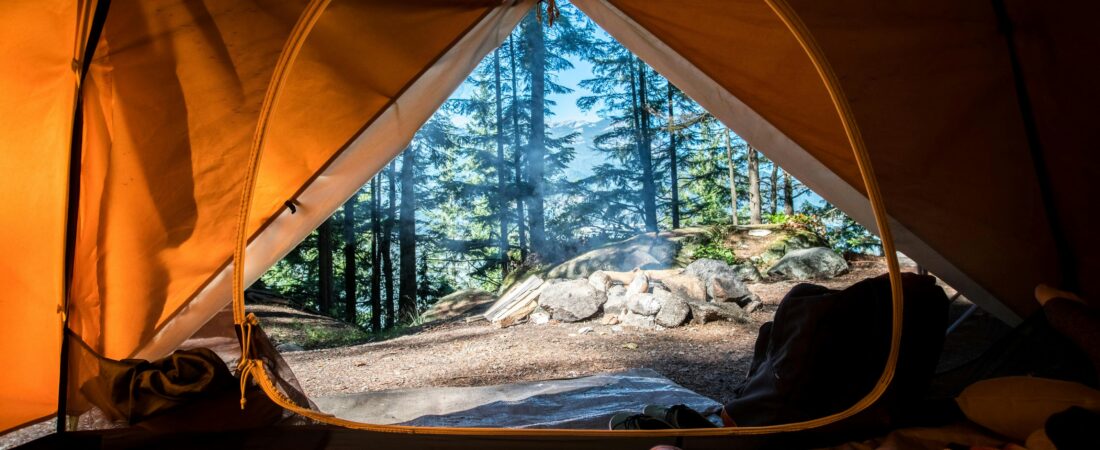
There is a version of family camping that looks like a REI catalog: coordinated gear, serene mornings, children roasting marshmallows with perfect patience. And then there’s the version most of us actually experience the first few times: the forgotten sleeping pad, the kid who suddenly hates the dark, the rain that arrives exactly when you forgot to seal the fly.
The good news: with a little preparation and the right gear, the real version gets really good, really fast.
Here’s what you actually need, along with some of our favorites… and the things that will elevate the whole trip.
The Non-Negotiables
A tent with honest sizing. The industry rule is simple: if the tent says it sleeps four, it sleeps two adults and two kids comfortably. Always size up. A family of four needs a 6-person tent. Look for a vestibule (the covered area outside the door) because it’s where wet shoes, muddy boots, and the dog can chill. Do not skip the footprint or ground cloth under the tent.
Sleeping pads for everyone. Not sleeping bags — sleeping pads. This is where most families get it wrong. Insulation from below is more important than insulation from above. Cold ground pulls heat directly from your body. Foam pads are lightweight and cheap; self-inflating pads are more comfortable. Kids who are cold are kids who are miserable and awake at 3 a.m.
Real sleeping bags rated for the temperature. Finger Lakes summer nights can drop into the 50s, even in July. A sleeping bag rated to 40°F is not overkill. Kids run cold when they’re sleeping. Check the temperature rating on the bag, not just the “comfort” range.
A headlamp for every person. Not a flashlight, a headlamp. Hands-free matters when you’re unzipping a tent in the dark with a child who needs the bathroom immediately. Bring extra batteries. Give each kid their own and let them feel responsible for it.
A first aid kit… new, or you know what’s in it. Band-aids, antiseptic wipes, tweezers (for splinters and ticks – check everyone every night), antihistamine for allergic reactions, any prescription medications, moleskin for blisters. Know what you have before you need it.
A cooler that actually does its job. A cheap cooler is a liability. A quality hard-sided cooler – Coleman, YETI, or the Lifetime brand if you’re budget-conscious, which will keep food cold for 3–5 days with proper ice management. Start with a cooler that’s been pre-chilled, use block ice, and keep it in the shade. Food safety matters.
A water source strategy. Know where your water is coming from before you arrive. If you’re at a developed campground, this is simple. If you’re primitive camping, bring enough water or a reliable filter. Kids get dehydrated faster than adults and complain less about it, which is its own kind of problem.
The Game Changers
These are the things veteran campers swear by that don’t show up on the basic lists.
A battery-powered lantern for inside the tent. The transition to darkness is one of the hardest parts of camping for young kids. A soft lantern they can turn on themselves: the Black Diamond Moji or the BioLite AlpenGlow are our favs, and make the tent feel safe and cozy instead of scary. Let kids control it. It helps big time.
Similarly, a warm evening with little to no breeze might require a little help from a portable tent fan, like this one.
A footprint-sized camp rug outside the tent door. A small outdoor mat – a cheap AstroTurf square or a packable camp rug – creates a defined “take your shoes off here” zone that keeps the inside of your tent dramatically cleaner for the entire trip. Life-changing. Truly.
A collapsible wagon. If you’re car camping with young kids, a foldable wagon (the Gorilla carts are popular with all the bells and whistles) eliminates twelve trips to and from the car and gives little kids a ride when their legs give out. It doubles as a gear hauler. Worth every inch of trunk space.
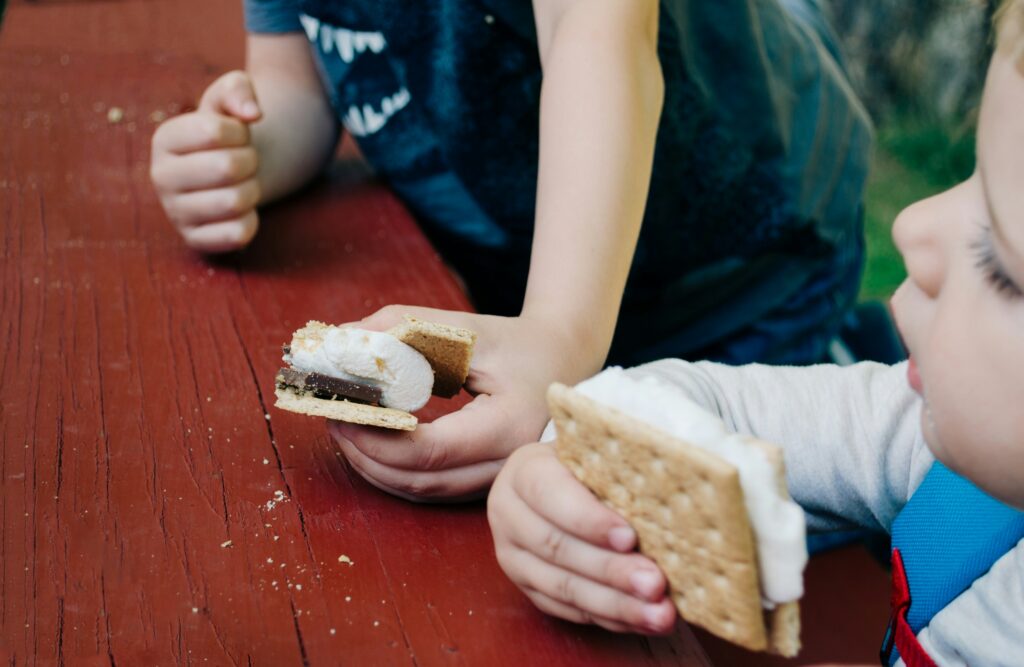
Wet wipes – the big pack. Before a shower, after s’mores, after the bathroom, after literally everything. Get the big pack. Baby wipes are a camping essential for every age group.
Pre-packaged meal kits or foil packet meals. Decision fatigue is real at a campsite. Anything you can prep at home and just cook over the fire eliminates so much stress. Foil packets might include a protein, a vegetable, some butter and seasoning, wrapped up and tossed on the coals. Simply cook in 20 minutes and produce zero dishes. This is the move.
Want to really win with the kids? Equip them with their own walkie-talkies and watch the exploration really take off. These will become their favorite outdoor toys in no time, and double-duty as a safety measure for you.
Glow sticks for bedtime. Cheap, festive, and universally beloved by children. Give each kid a glow stick when it’s time to wind down. They feel like a treat; they also make it easy to spot small people at dusk. Snap and hand out at 8 p.m. and watch the mood lift instantly.
A small pop-up privacy tent / changing shelter. Nobody told you about this before your first trip with kids and you’re welcome. Changing into dry clothes at a campsite with small children underfoot is logistically complicated. A $30 pop-up privacy shelter solves this completely and doubles as a dry gear storage spot if it rains.
Ear plugs – for you. Your kids will sleep through things that will keep you awake. Come prepared. Go the tried-and-true route, or consider Loops, which can be worn any time of the day to filter excess noise (travel, kids, snoring).
The Mindset That Makes It Work
Camping with kids isn’t about comfort… at least not at first. It’s about building competence. Every kid who learns to set up a tent, start a fire with supervision, identify a constellation, or cook their own breakfast on a camp stove is becoming someone. Let them do hard things. Let the day be unscheduled. Let them be bored enough to catch a frog.
The Finger Lakes has some of the best family camping in New York State, from Watkins Glen to Letchworth, Taughannock, Sampson, Buttermilk Falls. Get out there. Take the imperfect trip. The memories are always in the things that went slightly sideways. 🏕️